


Is it just me, or does our culture live from constantly reminding us that we are not enough?
You have to succeed. You have to make a name for yourself. You must accumulate money, followers and visible signs that your life is moving forward. Around this anxiety, an entire industry has emerged, producing millions of increasingly absurd books and speeches designed to provide us with endless motivation.
Of course, this desire is not new. Alexander the Great reportedly carried a copy of Homer’s Iliad with him during his campaigns and modelled himself on Achilles. He wanted his name to become immortal. According to Plutarch, Julius Caesar later encountered a statue of Alexander and became ashamed of his own life. Alexander had already ruled over vast territories at Caesar’s age, while Caesar believed that he had achieved nothing memorable.
Many of us still perform the same comparison, only on more private scale.
You may tell yourself that you do not care about glory, or kleos, as the ancient Greeks called it. Yet somewhere in your imagination, you may still wonder what a future Wikipedia article would say about you. Perhaps you dream of writing a book or publishing a scientific article that will finally make other people recognise your importance. Or you imagine an extraordinary career in art or business?
Let us be honest. Everyone occasionally constructs a heroic journey inside their own daydreams . We want our lives to form a story in which our struggles eventually reveal that we were exceptional all along.
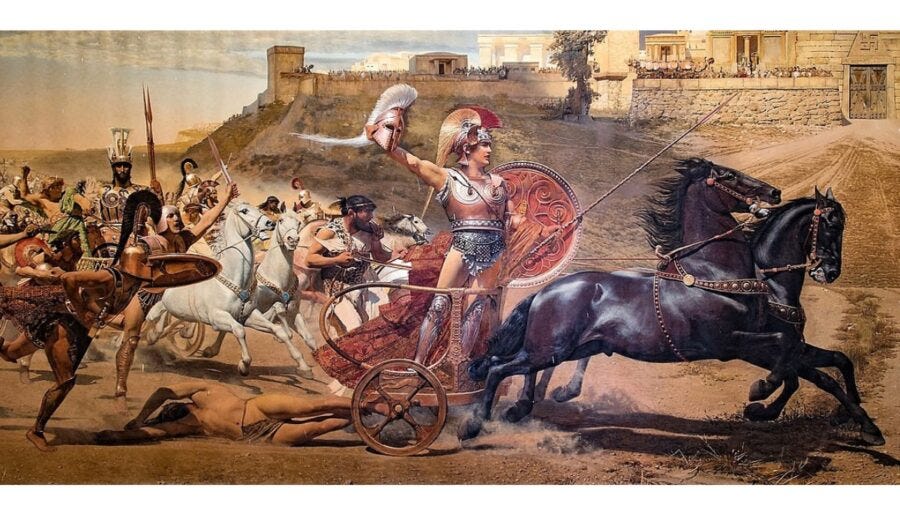
Just as we listen to motivational life stories or construct such stories about ourselves, we usually tell only half of what happened. A person who failed at university but later built a successful business may conclude that formal education was useless. The failure is reinterpreted as a necessary step toward success.
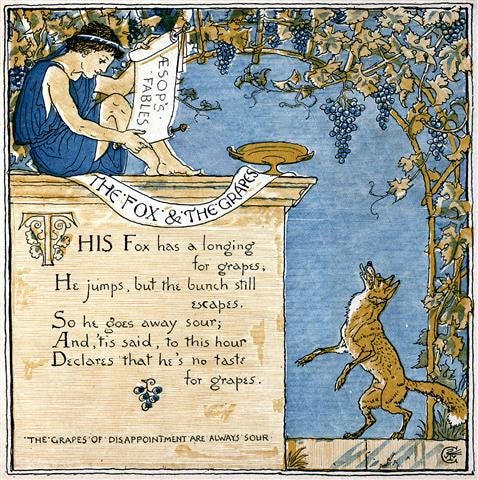
This resembles Aesop’s fable of the fox and the grapes. Unable to reach the fruit, the fox decides that the grapes must have been sour anyway. We often rationalise our disappointments in a similar way. We do not simply remember the past. We rearrange it until every rejection and humiliation appears to have guided us toward our present identity.
Heroic stories are shaped by the same selectivity. They preserve the moments that support the image of greatness and push everything else into the background. The story of Achilles has also been told in this way.
Biographies of great men were also an important genre in antiquity. Much like modern success coaches, ancient biographers tried to explain what separated extraordinary people from everyone else. Yet greatness was often produced through a kind of deliberate self-mythologisation. To convince others of their superiority, rulers first had to convince themselves that they were destined for more than an ordinary life.

Alexander shaped his own identity through divine ancestry. His mother’s family claimed descent from Achilles, while his father’s dynasty traced itself back to Heracles. Stories also circulated that Zeus, rather than Philip, was Alexander’s true father.
He even attempted to introduce προσκύνησις, a Persian court ritual involving bowing or prostration before the ruler. Macedonians and Greeks found it disturbing because such gestures were usually reserved for the gods. Alexander’s soldiers had followed a heroic king. They had not agreed to worship him as a god.
Later rulers repeated this pattern. Julius Caesar emphasised his family’s supposed descent from the goddess Venus, connecting political power with divine ancestry. Caesar himself was officially deified only after his death. It was Augustus who could then publicly call himself divi filius, the son of a god.
The Greek word for the elevation of a human being into divine status is ἀποθέωσις. Yet the process began when a powerful person transformed his life into a myth and persuaded others to inhabit that myth with him.
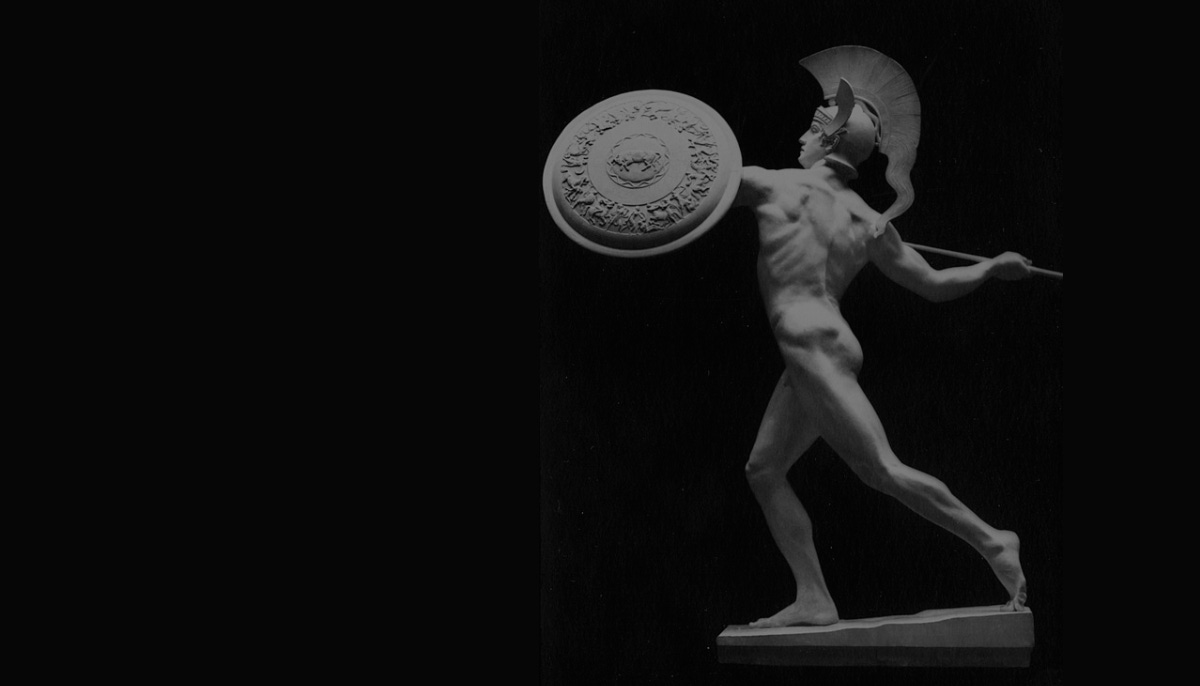
For insecure people, stories about gods and heroes can be deeply comforting. Most people live relatively ordinary lives and are often unsure what to do with them. Figures who claim an extraordinary birth, or a heroic destiny give society someone to admire. When life goes wrong, the hero or ruler can also become the figure onto whom disappointment is projected. The same we can see in modern politics like Trump, Putin or Ceos like Musk , when poeple see the saviuors or devils in the same person both groups reacting to a myth.
People who suffered under heroic rulers developed different answers and different ways of surviving this political mythology. The most influential anti-Achilles text produced in the Greco-Roman world is the New Testament.
Like the ancient biographies of Alexander or Caesar, the Gospels tell the life of a man whose identity is connected with the divine. Yet by ancient heroic standards, the Teacher from Nazareth appears to be an absolute failure. He does not die gloriously in battle. He is abandoned and executed as a criminal.
The Gospel of Mark nevertheless begins with the words, “The beginning of the good news of Jesus Christ, the Son of God.”
In Greek, it reads, Ἀρχὴ τοῦ εὐαγγελίου Ἰησοῦ Χριστοῦ, υἱοῦ θεοῦ.
This opening is provocative because it gives the language of divine importance to a man whose life seems to contradict everything associated with heroic greatness. The jewish Teacher is placed beside, and ultimately above, figures such as Achilles, Alexander, and Caesar, because the entire meaning of glory is being reversed.
This could easily have sounded blasphemous. In many religious traditions, it still does. The claim challenges the structure of heroic mythology itself. It questions whether divine favour is visible through conquest and public victory. It also questions whether our own heroic journeys matter as much as we want them to.
The New Testament destabilises the idea that greatness must look heroic at all.
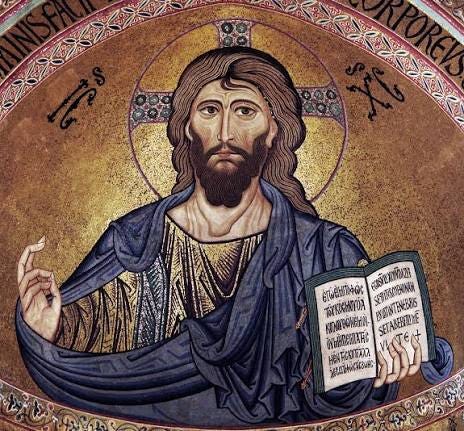
But I am not here to announce another euangelion, another piece of good news.
In the Greco-Roman world, euangelion was not exclusively a Christian word. It could refer to public announcements of imperial victories or the birth of a ruler. The famous Priene inscription, for example, presents the birth of Augustus as the beginning of good news for the world. The word therefore belonged partly to the language through which imperial power narrated itself as salvation.
Mark uses this language to place an emperor and a humiliated provincial teacher within the same symbolic field.
But can the human psyche really accept such failure? Can we question what success means and define it personally, or must we always transform it into another myth?
The attempt to challenge heroic mythology did not create a world without heroes. Christians gradually turned Jesus into another exceptional figure, someone to worship. His failure became the greatest success story ever told. Humiliation became glory. Execution became sacrifice. Death became victory. Stories of miracles and cosmic significance protected his life from appearing ordinary.
This tells us something uncomfortable about our inability to leave failure alone. We cannot simply say that someone suffered and lost. We must discover a hidden victory. We transform the defeated person into a misunderstood genius or a hero whose triumph will only become visible later.
This reversal survives in modern morality. Success is publicly criticised but secretly desired. We condemn ambition and recognition, yet continue to measure ourselves against those who possess them. The successful person must then be declared corrupt or privileged. He becomes Caesar, the devil ( Achilles with Horns) , or some other mythical enemy.
The hierarchy remains intact. We have merely reversed its moral signs.
Instead of freeing ourselves from the need to be exceptional, we create a new form of exceptionalism in which failure proves our purity. We still cannot allow a life to be ordinary. We still need either a hero or a villain to explain it.
We cannot escape heroic myths completely. They may respond to something deeply rooted in human psychology, our need to organise life into meaningful stories. But we can at least try not to become trapped inside them.
The greatest weakness of every success story is its selective memory. When we tell a story of glory, we preserve the victory and forget the tragedy that made it possible. This is especially true of Achilles.
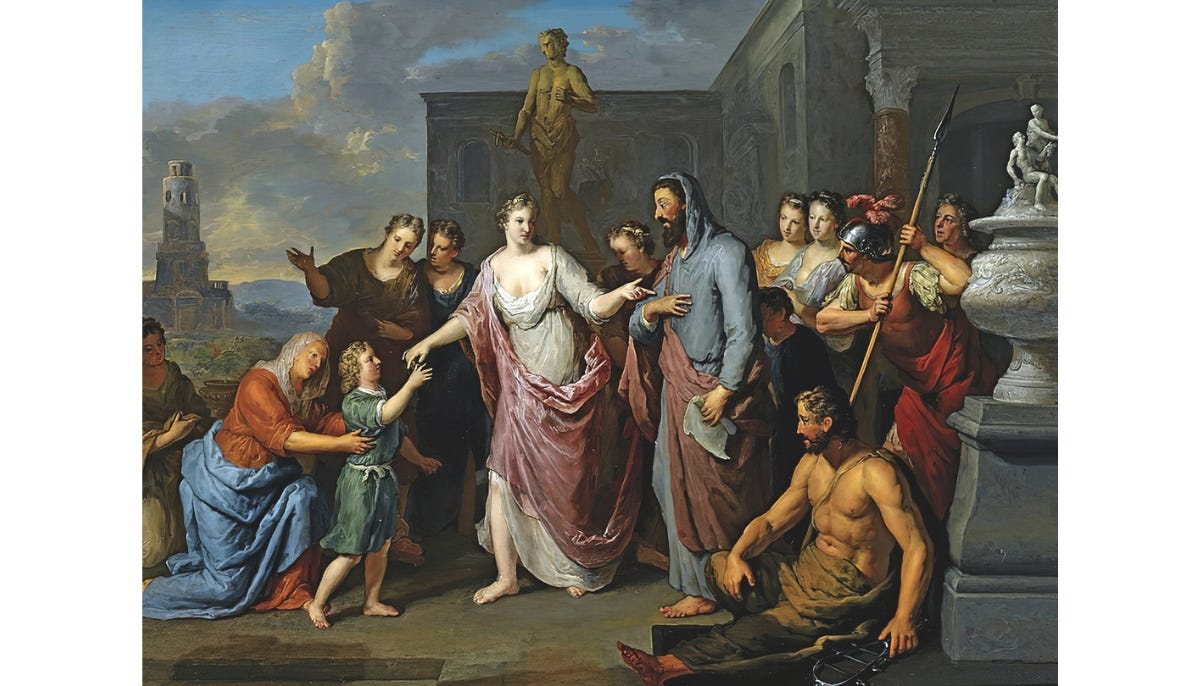
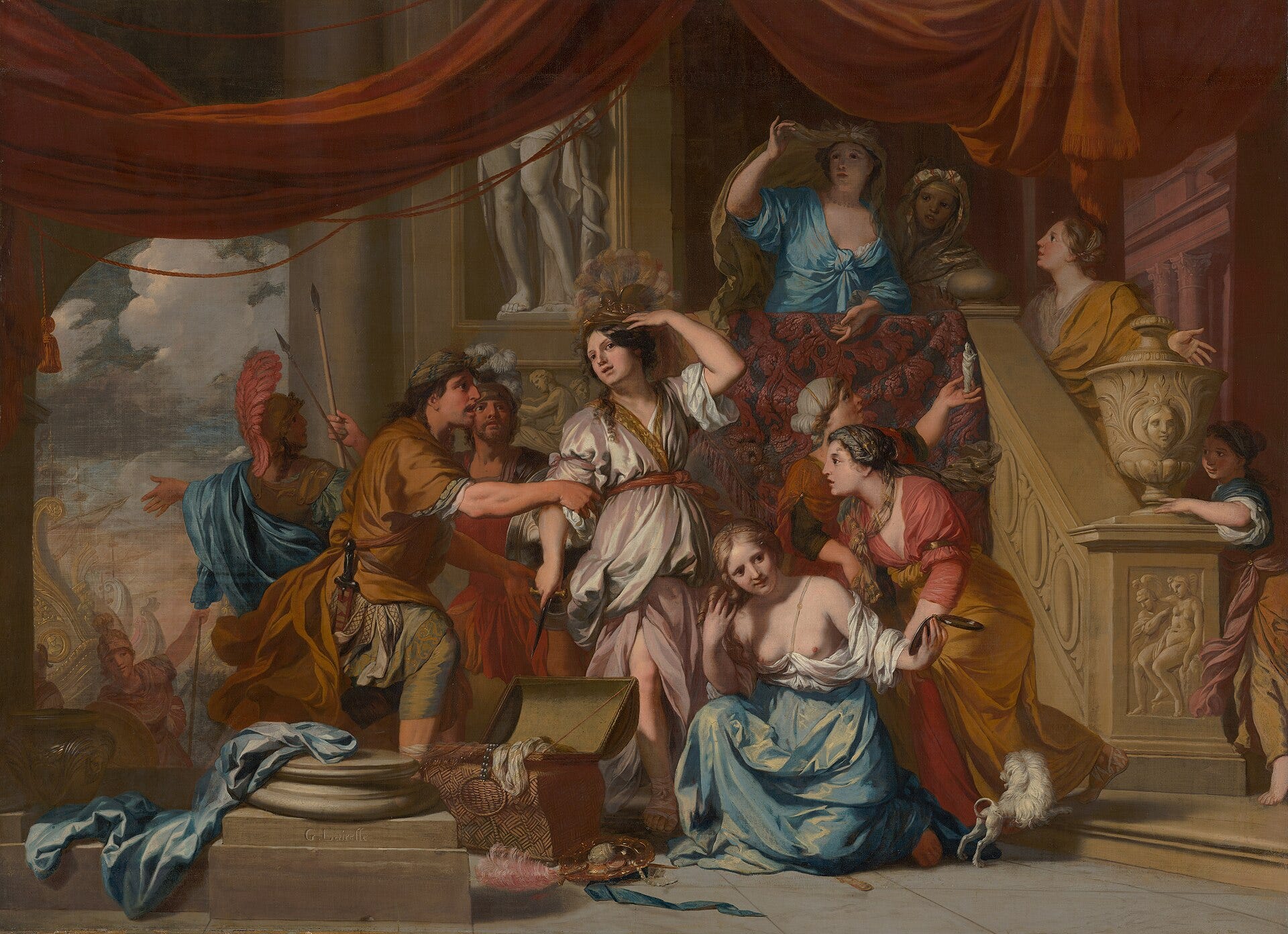
We remember him as the greatest warrior of the Trojan War, but his story begins with an attempt to protect him from becoming that warrior. His mother, Thetis, knows that Troy will bring him glory and an early death. In later versions of the myth, she hides him on the island of Skyros among the daughters of King Lycomedes, dressed as a young woman. Before Odysseus discovers him, he is capable of remaining outside the war and outside the identity history will later impose on him.
Achilles has less to prove than almost anyone around him. Everyone already knows that he is the best fighter among the Greeks. His identity does not initially grow from the insecurity that drives many modern performances of heroism. He does not need motivational speeches or constant evidence that he is exceptional.
The tragedy begins when other people force him to perform that identity.
Agamemnon takes Briseis from him partly to demonstrate that political authority stands above individual excellence. Achilles responds by withdrawing from battle. Patroclus then puts on Achilles’ armour and enters the battlefield in his place. He attempts to inhabit the image of Achilles. The imitation ends with his death.
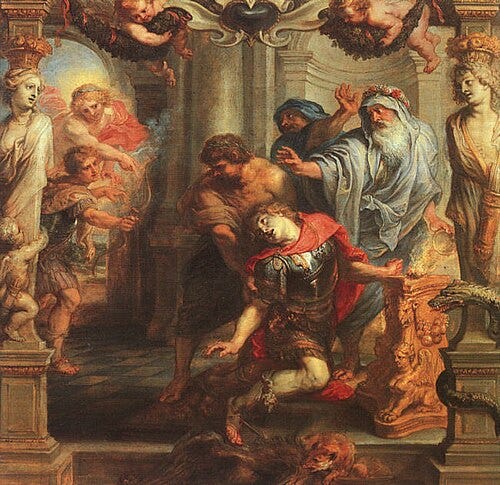
Only then does Achilles fully choose the role that will kill him. He returns to battle knowing that his own death will follow the death of Hector. Earlier in the Iliad, he describes the two destinies before him. He can remain at Troy, die young, and gain imperishable glory, or return home and live a long life without lasting fame. After Patroclus dies, the choice is no longer an abstract decision between glory and obscurity. Grief makes the heroic path feel unavoidable.
Yet Homer does not allow glory to become a simple consolation. When Odysseus meets Achilles in the underworld, Achilles rejects the honour of ruling over the dead. He says that he would rather work as a hired servant for a poor man while alive than reign over all the dead. The greatest hero of Greek poetry finally tells us that an obscure and difficult life is worth more than legendary death.
The more modest lesson is that a life does not need to become legendary in order to be worth living.
There is something deeply tragic about the countless people who have taken inspiration from Achilles without listening to Achilles himself. They admire his glory but overlook his regret. They imitate the warrior while ignoring the man who initially tried to stay away from war and who, after death, would have exchanged all his fame for one more ordinary life.
Achilles became the symbol of heroism, although his own story may be warning us not to become Achilles.
Questioning the heroic ideal is associated with vanitas or nihilism. Many people resist it because they fear that, without heroic ambition, life will become meaningless. They would rather become Achilles on a modern battlefield.
Some become cannon fodder in actual wars without fully understanding what they are fighting for. Others work themselves to exhaustion for corporations that could replace them within days. They will receive a photograph on the wall, a medal, a diploma, or another certificate intended to prove that their life had value. We continue collecting symbols of importance because we are afraid that an ordinary existence might not be enough.
Irony may not save everyone from this trap, but it can create some distance from the heroic image we construct around ourselves. More importantly, genuine relationships can return us to reality. Caring for actual people, rather than for humanity in some abstract and heroic sense, weakens the fantasy that we must become exceptional before our lives can matter.
Achilles himself may not have wanted to be exceptional as much as later generations wanted him to be.
An ordinary life does not mean abandoning ambition. It does not mean becoming lazy or afraid of difficulty. It means choosing your own battles instead of marching into wars whose purpose you do not understand. It means working, failing and trying again without demanding that every effort prove your greatness.

Love this!!
Great lesson. An ordinary life doesn't have to be an unimportant one. That's easy to lose sight of sometimes.