


So what kind of beauty must a woman possess if countless ships and the entire army of a nation sail to Troy to bring her back?
This question returned after three thousand years with Christopher Nolan’s new adaptation of The Odyssey and his decision to cast Lupita Nyong’o as Helen. It reopened the question of what we find desirable and what kind of beauty is worth fighting for.
But while looking at these debates, dear reader, I began asking another question that goes deeper. What if the beauty we fight for is not simply real, but created by fantasy, rivalry, and the desire to possess what others want? Helen becomes an idol, a carefully constructed image, almost independent of her actual face, her actual beauty, and her reality as a person.
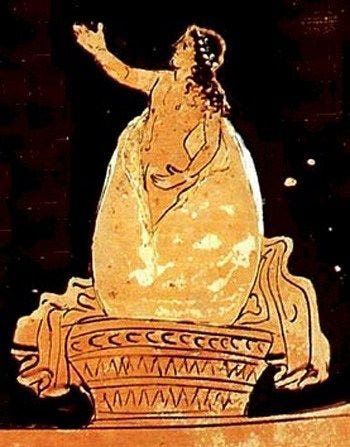
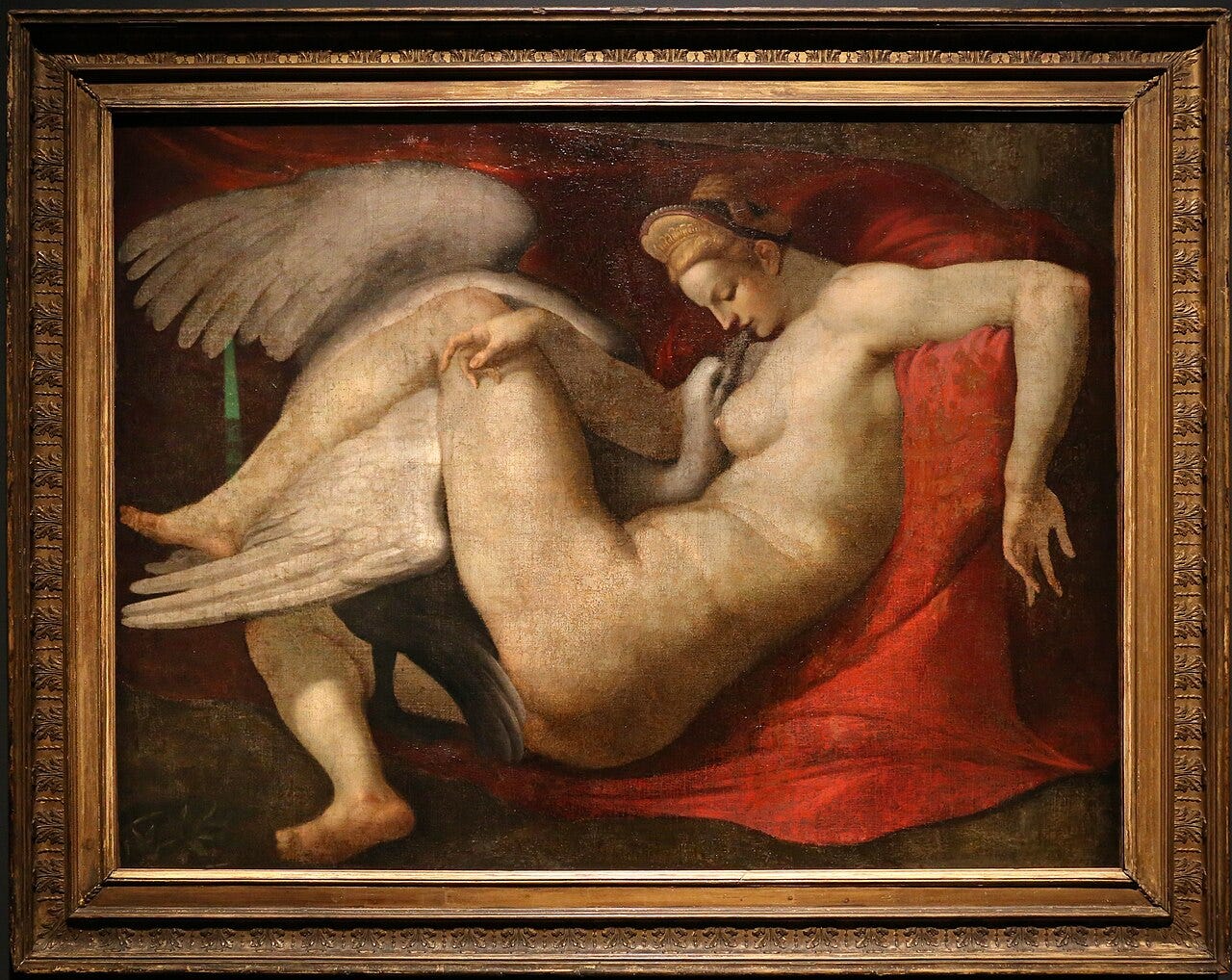
Helen is the daughter of Zeus, the god who represents political power at its highest point. He is the father of the Olympian gods, but also a figure of limitless desire. Zeus seduces Leda, the queen of Sparta, not through raw power and violence alone, but by transforming himself into a beautiful swan. The bird appears admirable, graceful, and breathtaking. His power hides behind beauty and radiance.
Helen later emerges from an egg as the child of a god disguised as a beautiful bird. Her beauty is therefore connected with transformation and design from the very beginning.
In modern terms, we might replace Olympus with Hollywood. Both represent centres of power that transform themselves into images of desire. Political and military power makes itself beautiful through culture. It seduces us through films, music, food, fashion, and carefully constructed images.
Helen is the child of this process. She represents designed beauty, created at the moment when power seeks legitimacy through admiration.
Helen’s beauty created a political problem because she had many powerful suitors. Odysseus helped solve it by proposing the Oath of Tyndareus. All the suitors had to accept Helen’s chosen husband and promise to defend the marriage if it was ever violated.
But being desired by everyone means that the gaze of others no longer cares much about who you actually are. It cares about the image, the idol, and what possessing you would mean. Among kings, having Helen became a form of rivalry and a symbol of status. She was desired partly because everyone else desired her.
In modern terms, Helen becomes something like an exclusive car, a private plane, or a yacht. The object gains value not only from its own qualities, but from the competition around it and from what possessing it says about us.
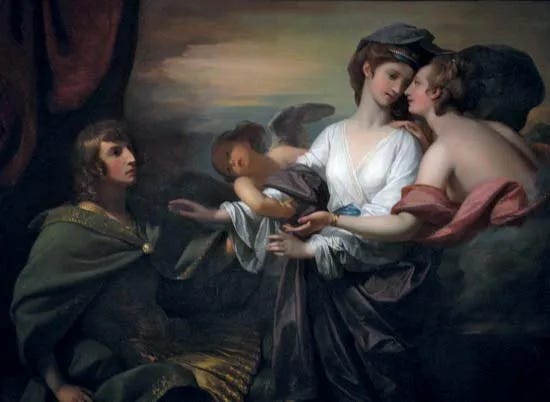
Then Paris, the young prince of Troy, appears. Aphrodite has promised him the most beautiful woman in the world.
So, dear reader, Paris is not simply a romantic lover helping Helen escape an unhappy marriage. He is chasing a symbol. He wants to possess what everyone else desires. He is interested less in Helen as a person than in what having her would mean.
Paris chooses Aphrodite and rejects Hera and Athena. In doing so, he rejects political power, kingship, leadership, wisdom, and victory in war. He chooses beauty instead, but beauty separated from the qualities that could give it substance.
In this sense, Helen becomes an empty signifier. Paris chooses the symbol without understanding what stands behind it. It is similar to modern people chasing symbols of prestige without understanding what those symbols are supposed to represent, like buying expensive clothes covered in brand names and believing they represent actual wealth.
With Aphrodite’s influence, Paris manages to take Helen away. We might understand this enchantment as something close to an overwhelming crush. In the ancient world, such desire could be seen as a form of madness, a force that takes control of the mind and destroys judgment. It is therefore not love in the deeper ancient sense, but a temporary possession by desire.
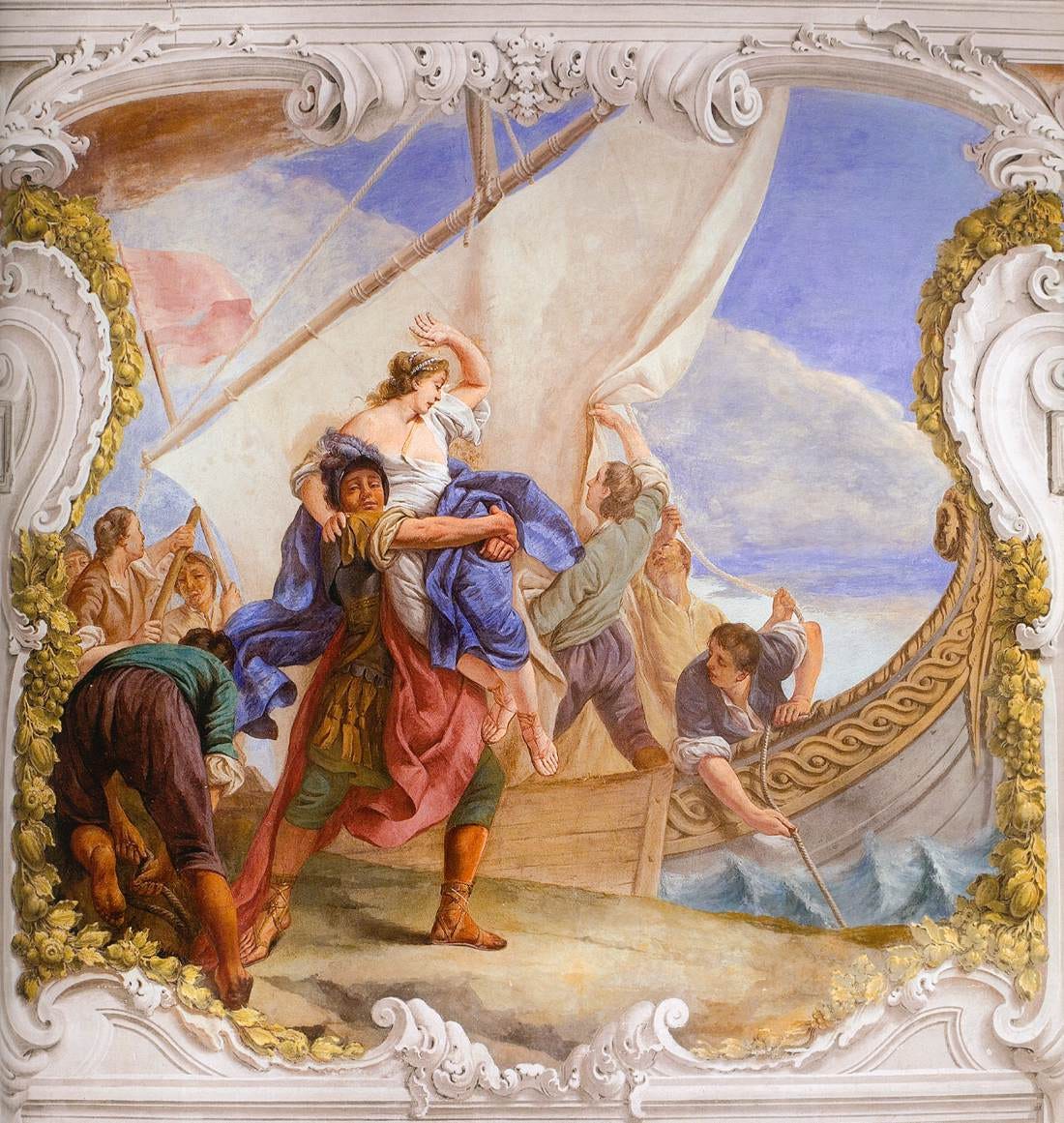
In Euripides’ version, Paris does not take the real Helen to Troy. He takes an eidolon, a copy created by Hera, while the real Helen is hidden in Egypt.
The Greeks and Trojans are not fighting over an actual woman, but over an image. Helen as an object of desire becomes exchangeable. Her individual beauty and personality do not really matter anymore. What matters is the symbol, the prestige, and the rivalry around her.
The eidolon does not need to be the real Helen. It is enough that everyone believes it is her. Thousands of men can fight and die for a copy, as long as the copy still carries the same meaning.
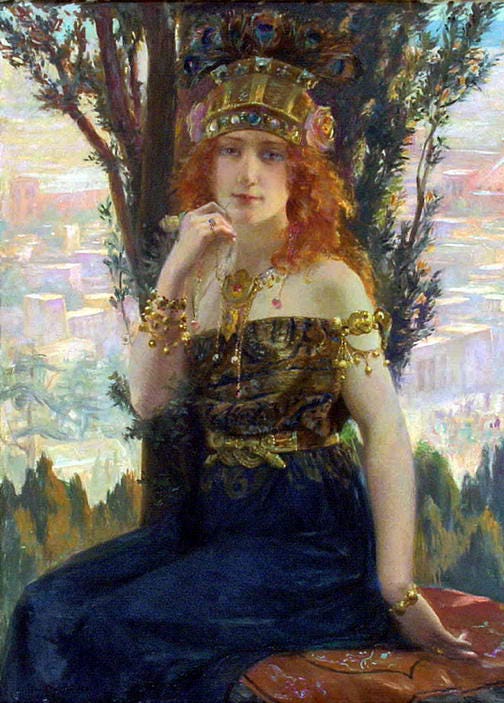
But Helen herself does not remain completely silent. In the Iliad, she becomes disillusioned with Paris. She sees that the man who carried her away is not the great hero created by desire. After Menelaus defeats him in combat, she speaks to Paris with contempt and shame.
This is the moment when the image begins to break. Paris desired the most beautiful woman, but Helen sees the actual man behind the fantasy and is disappointed. Everyone else continues fighting for the symbol of Helen, while Helen herself is already tired of the story created around her.
In this sense, Helen is not so different from a modern celebrity imprisoned by the persona created for the audience. She is desired as an image, but rarely allowed to exist as an actual human being. The public wants the eidolon to remain beautiful and unchanged.
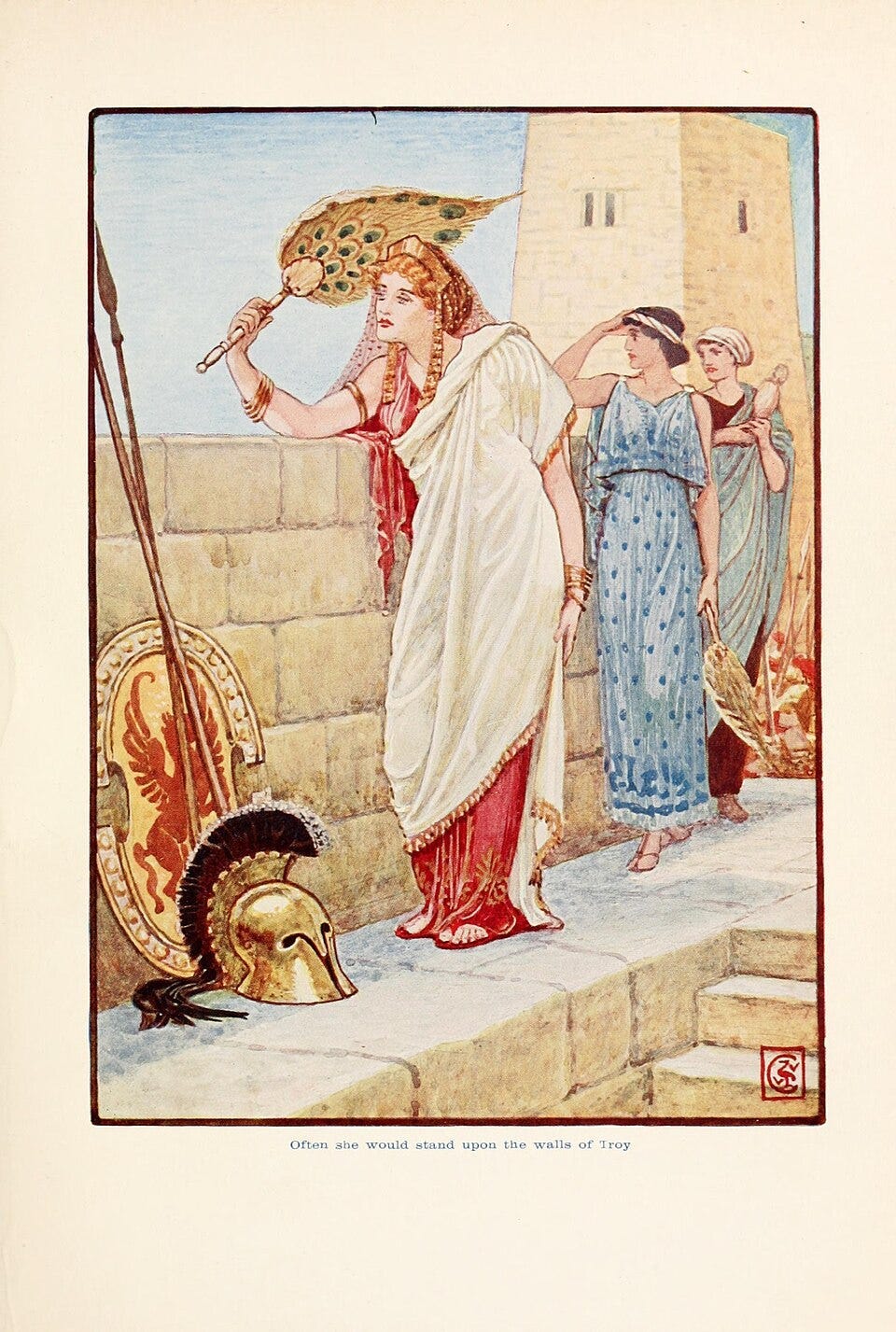
When the real person no longer fits the image, many celebrities break under the pressure, just as Helen begins to break beneath the story others created around her. This also raises another question for critics of Nolan’s film. Is Helen allowed to age? Is she allowed to stop being seen as desirable?
By the time of the Odyssey, Helen is no longer the young woman Paris first carried away. Many years have passed, yet even the modern audience still expects a never ageing eidolon
Films like Troy or The Odyssey are also eidolons in the same way. They do not simply repeat the ancient story. They reshape it, just as Zeus reshapes himself into a swan. Political power presents itself through beauty and desirable images.
Choosing an actress who does not fit traditional Western standards of Helen’s beauty is usually understood as a political subversion. Nolan may have wanted to challenge racist ideas of beauty. But I would place this decision in another frame.
Imagine that you are Zeus. For a long time, you believed that power had to make itself beautiful in order to be accepted. It had to hide its violence behind elegance, culture, so that people would not feel oppressed.
The point is not whether Nyong’o is beautiful or not. The point is that the argument around her already performs the logic of the eidolon. Millions of people debate an image of Helen before they have even seen the full performance.
But then you discover that beauty is not even necessary. Whatever you present to people as desirable can become an eidolon. It can become an image around which they argue, consume, and even fight. Power no longer needs to follow an existing standard of beauty. It can create the standard itself, or even test how far its subjects will accept what they once would not have desired.
The film probably has very little to do with actual Greek culture. It is more an American fantasy of antiquity, with modern America placing itself inside the ancient story.
The logic of Helen as an eidolon is probably everywhere in our culture. We see idols on our phones and imagine that we somehow possess them. We create stories around them, follow them, copy them, and desire what they seem to represent.
A large part of consumption works in the same way. We fight for objects because other people want them. If everyone desires something, we begin to think that we should desire it too.
The focus is therefore no longer really on beauty. The focus is on the competition itself. Cultural production becomes less interested in creating something beautiful and more interested in producing slop that provokes division, arguments, and endless desire. It gives us images to fight over and then sells us the fight.
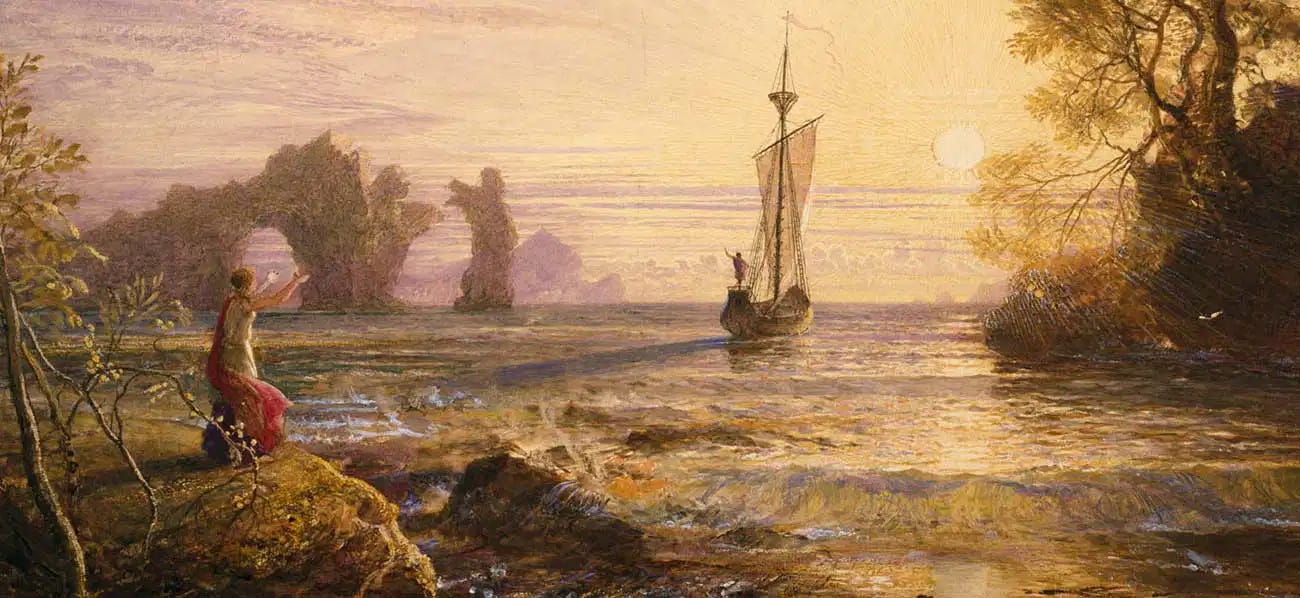
Odysseus was not really interested in Helen. He wanted Penelope, so he believed that he could solve the problem of Helen’s many suitors from the outside. His idea was that all of them should swear to protect Helen’s marriage, no matter who became her husband.
But he did not see that the forbidden fruit is often the sweetest. Not being able to possess something can make desire even stronger. The gaze becomes more obsessive and eventually more violent.
In the end, Odysseus is trapped by the oath he helped to create. He has to go to a war he never wanted, fighting for a woman he did not desire. He leaves Penelope and Telemachus behind, the people who actually matter to him.
This is also how modern people get swallowed by competition. We fight for careers, status, consumption, politics, or attention, even when we do not truly care about the prize. We enter the rivalry because everyone else is already inside it. Some eidolon has been placed before us, and we sacrifice the things that actually make sense for our lives.
Odysseus spends ten years fighting for Helen and another ten years trying to return to Penelope. Perhaps this is the deepest irony of the story. We lose years chasing the images desired by everyone, only to discover that what mattered was the ordinary life we left behind.
I'm appreciating how you tied Zeus turning into a swan to modern Hollywood glamour. It's power dressing itself up as beauty so we don't notice the muscle underneath. The yacht and private jet comparison for Helen made me chuckle because it's so true. Much of what we covet is really just wanting to win the competition for it.
Great read, such an interesting topic to explore