

The Agamemnon Trap
When Status Eats Its Children

A father sacrifices his own daughter so his army can sail and his name can become great.
Is this a price worth paying?
Or is Agamemnon just a heartless and insecure man going after a trophy?
His story has unsettled me for a long time. And I want to take you, my dear reader, on a journey to understand the symbolic logic of status.
Because the Agamemnon trap is still in our culture, and it is quietly shaping our lives.
So let’s try to connect the dots.
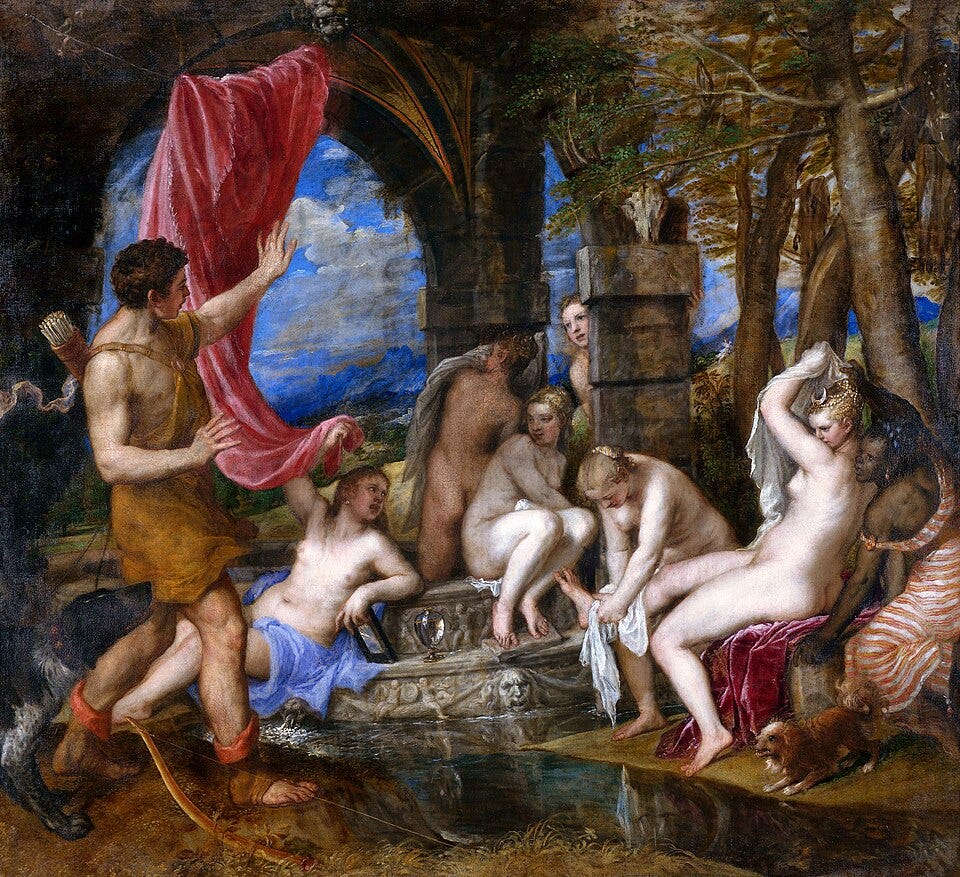
We live in a world where almost nothing wants to remain hidden. We want to hear all the dirty stuff boys talk about in locker rooms. We want to turn feminine spaces into brands, exposing every detail about relationships and friendships.
The intimate connection between two souls becomes market value, sexual capital, and symbolic prestige. The partner is often a trophy that shows your social calibration.
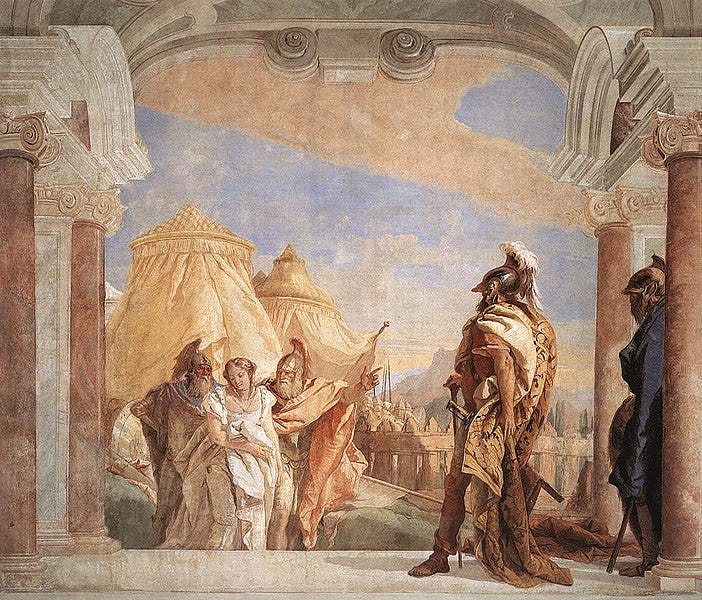
Our wannabe legend goes hunting in a sacred forest.
Crossing boundaries has a cost. Exposing what should remain hidden to the light of knowledge and power has a cost too. The myth speaks about this cost through Artemis.
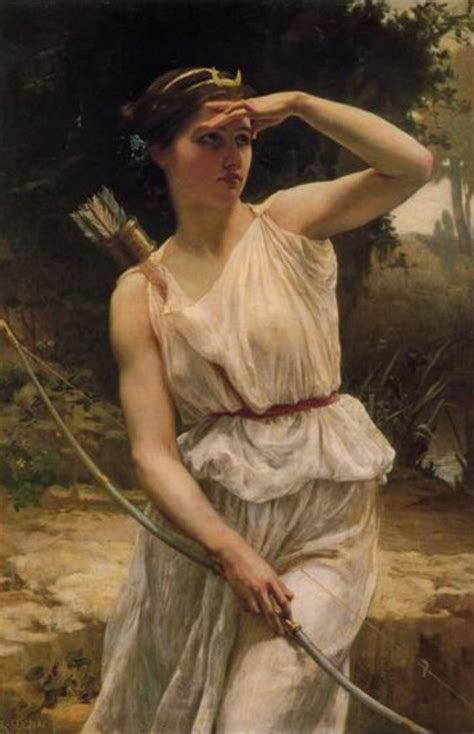
She is the goddess of wild femininity. The forest, the moon, the hunter who hunts to survive in the wild. She represents the part of femininity that is not fully bound by the order of society, by the duties of marriage, daily work, or public expectation.
Artemis connects to the private, hidden, and unspoken aspects of life. She protects what should not be touched too early or exposed too violently: pregnancy, little children, animals, the young, the vulnerable, and everything that still needs darkness in order to grow.
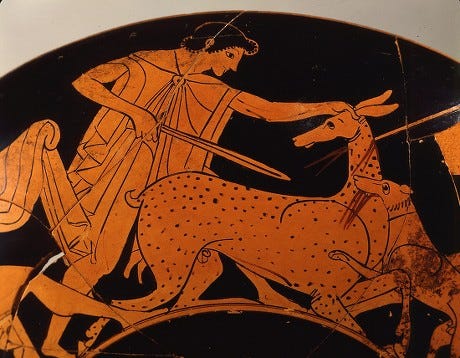
Agamemnon kills the sacred deer just to show off in front of other men. He wants to prove what a great hunter he is, maybe even greater than Artemis herself.
It is like a modern person who seduces others not out of love or real desire, but to show what a great seducer he is. Or a person who treats his partner like a trophy, something that proves his own importance.
It is mastery and power as spectacle. The goal is not connection, but impression.
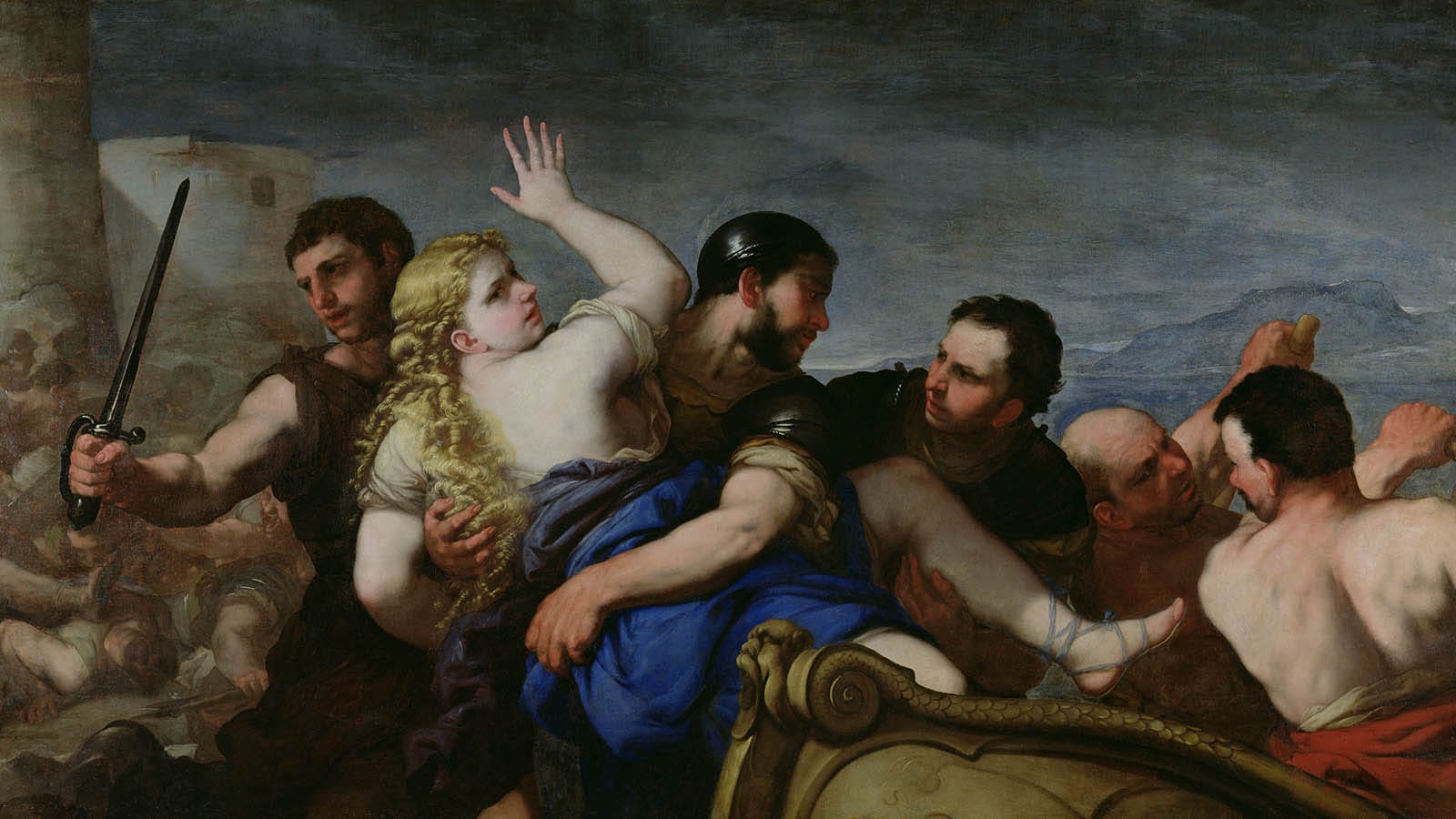
Agamemnon gathers a huge army to help his brother avenge an insult: the most beautiful woman in Greece was seduced and stolen by the Trojan prince Paris.
This creates the question: would Helen still be considered the most beautiful woman in the world if another man had not stolen her?
Helen is the most beautiful exactly because other men want her. Her beauty becomes bigger through the masculine gaze, through rivalry, jealousy, and prestige. She becomes the greatest prize among kings. The kings are less interested in Helen as a person than in what possessing or losing her says about them.
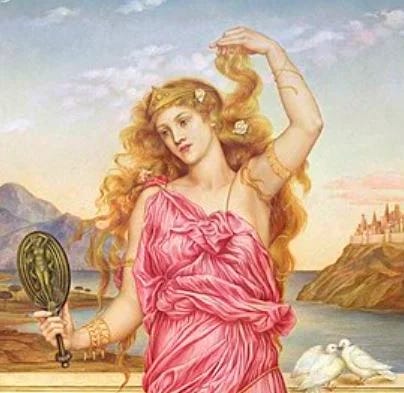
In the Iliad, she is described as terribly like the immortal goddesses to look at: “αἰνῶς ἀθανατῇσι θεῇς εἰς ὦπα ἔοικεν.”
To possess the most wanted woman symbolises power. It makes others jealous. Helen becomes a sign of status.
It is similar to owning the exclusive car everyone wants, getting a place at a prestigious university, or working for a world-renowned company. What gives these symbols their greatness? Are they really always as great as their names suggest? Or do we want these prestige symbols because we hope they will say something about us.
Where does the fantasy come from that getting the symbols of success will finally make us full?
I would connect it to the fact that, as grown-up people, Agamemnon and we no longer belong under the protection of Artemis.
Earlier cultures had initiation rituals into manhood, womanhood, or adulthood. These rituals often included a separation from the mother, from childhood, from the protected space.
This separation is necessary. But it also leaves an inner vacuum. We want to belong somewhere. To be at home.
Nostos means return, homecoming. A longing to come back. A wish for domestic comfort, for love, for being received somewhere without having to prove yourself all the time. Algos means pain or suffering. Together they form nostalgia: the suffering of wanting to return.
Working outside can become a daily journey to Troy. At least today we do not burn other cities, we just fight other companies from our offices.
And still, in the evening, there is the same old wish: to come home.
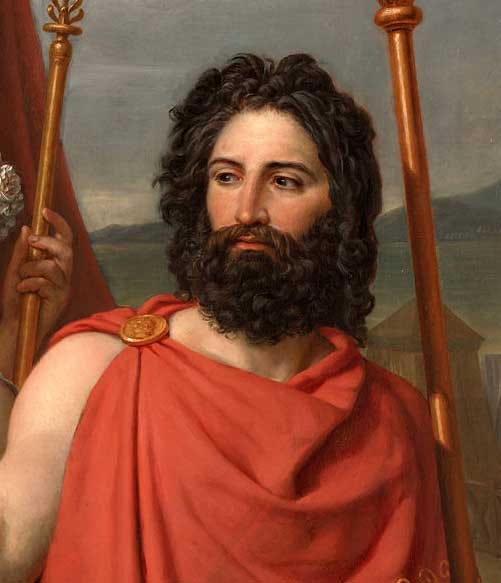
Agamemnon, like many of us, does not feel enough.
He wants to be the king of kings. The man standing above the ruins of Troy.
Like a modern person asking himself: am I worth something without a degree, without my luxury car, without my 60-hour job? Is my partner staying with me if I stop performing, or will I be replaced by someone else?
This anxiety makes people obsessed with symbols.
From a psychological standpoint, symbols are shortcuts to reality. Actual connection takes time. Understanding the actual person takes energy. So signaling usually wins in the short game.
Approval in a work hierarchy. A prestigious job title. The right partner. The right body. The right car. The right …
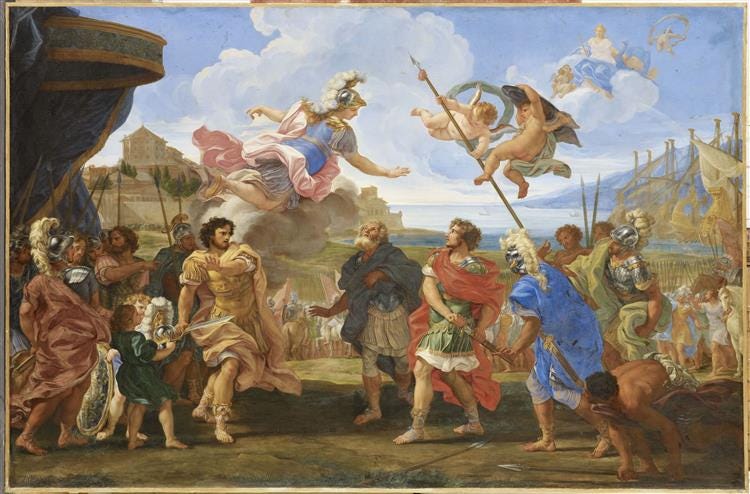
So Agamemnon first goes after the deer, the symbol of innocence, to show off. And when he wants to go to Troy, the winds stand still. The army cannot sail.
Then the real question appears:
Are you willing to sacrifice your private happiness to become successful?
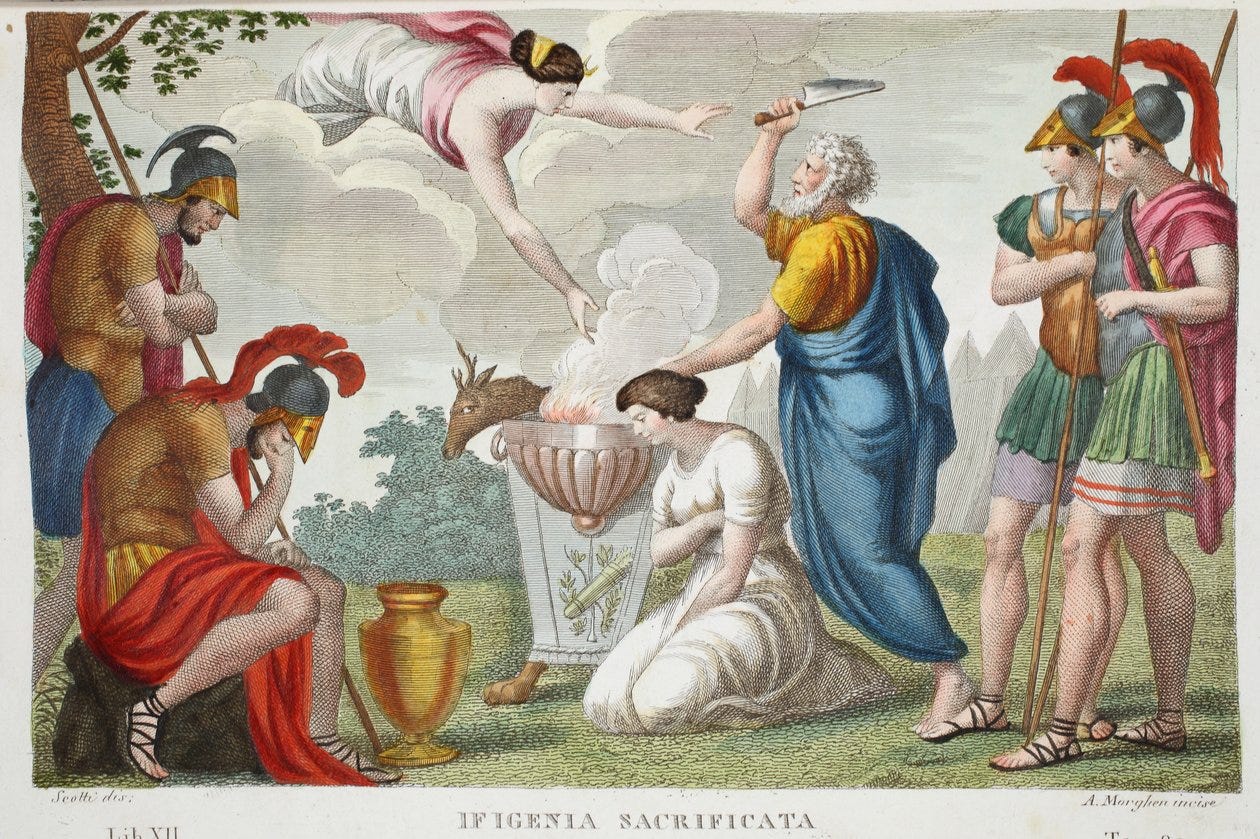
For a modern reader, it feels almost inhuman to imagine a father sacrificing his own daughter.
But in many versions of the story, Iphigenia does not actually die. Artemis takes her away and makes her a priestess. So maybe a metaphorical reading is allowed here: Agamemnon, like many modern people, does not only sacrifice his daughter. He loses the connection to her.
He goes after his trophy hunt, after the fantasy of being important.
And this made me think: Agamemnon would probably be a very successful masculinity coach today. He would sell the idea that you are nothing without success. Nothing without status. Nothing without proving yourself to others.
But the myth shows the price.
You can become impressive to strangers and become absent to your own child.
He could have said: let us wait for a month or two. I will take the shame of not sailing. I will carry the humiliation instead of sacrificing my daughter.
But he could not lose face.
So the question is: does the King of Kings really have authority, or is he just an insecure big fellow who constantly needs to perform to be taken seriously?
Agamemnon achieves his glory after many years. He becomes the man who brings Troy down.
But the biggest fear of not being enough becomes a self-fulfilling prophecy.
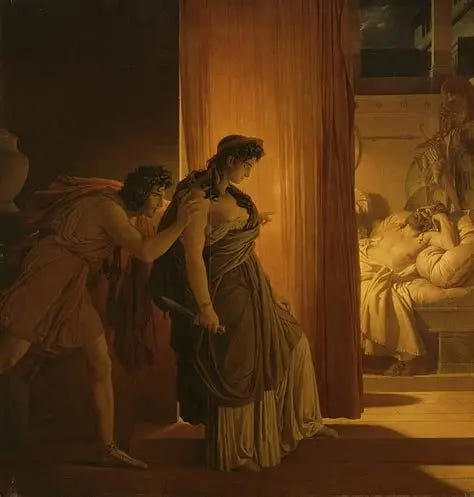
During all those years, his wife Clytemnestra finds a lover. And the king of kings, after all his glory, comes home to be killed and replaced. After all his achievements, he loses the house.
But this is the tragedy of the Agamemnon trap.
He sacrificed connection to become important, and then wondered why nobody waited for him as a human being.
He made himself into a symbol. Into a deer to be hunted.

And this reveals the modern mechanism of desire. We are Agamemnons and deer at the same time, turning ourselves into symbols of consumption to satisfy each other’s hero stories.
Other people become trophies we collect for our life projects.
When life becomes a game of status and power, we all pay the price to Artemis.
But the Greeks give us another figure too: Odysseus. He also goes to Troy, but his center is not status.
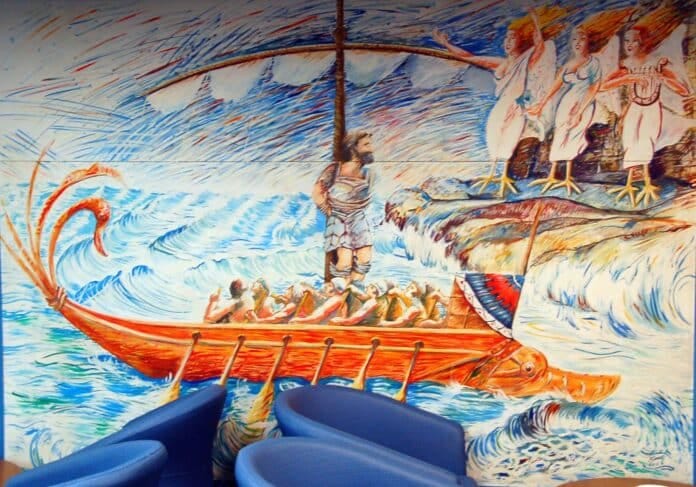
Odysseus is far from perfect, but he does not really want to go to Troy.
He has a wife, Penelope, a newborn son, Telemachus, and a home in Ithaca.
That is why the story says Odysseus tried to avoid the war by pretending to be mad. He yoked a donkey and an ox together and started plowing the field in a strange way. Palamedes exposed him by putting baby Telemachus in front of the plow. Odysseus stopped, proving he was not insane.
So Odysseus goes to Troy because he is forced by oath and duty. He is trapped too, but differently.
He reminds me of a modern person who works because bills still need to be paid, but whose life center is not the symbols of status or the approval of others.
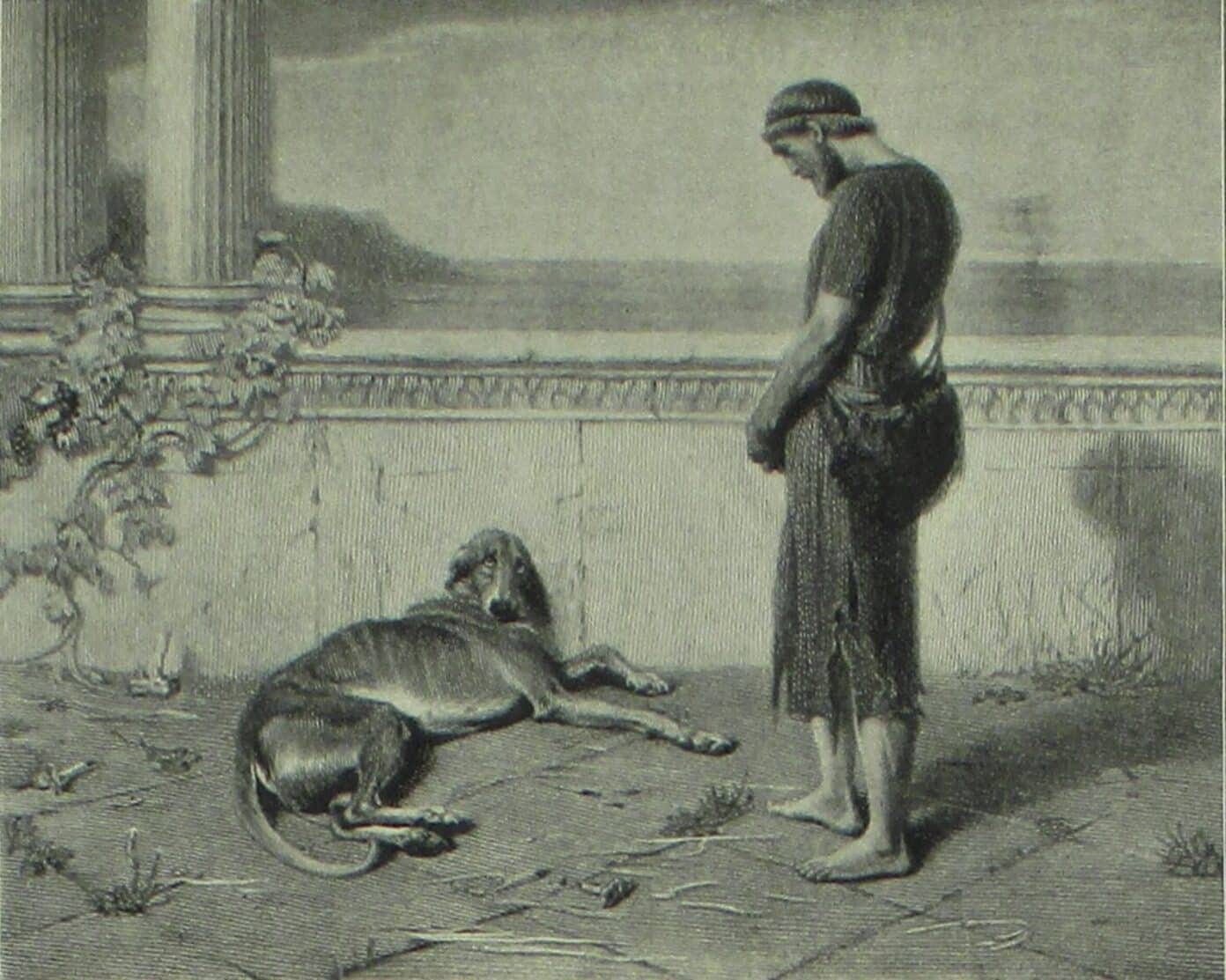
But Ithaca is not waiting for him untouched. When he returns, he comes disguised as a beggar. Only his old dog Argos recognises him, and dies after seeing him one last time.
Odysseus knows what happened to Agamemnon.The thought must be there: will I come home and be killed too? Is my home still mine, or am I returning only to an old image in my head?
That is why he tests everything.He overthrows the suitors and finds that Penelope was still connected to him, not as a fantasy, but as a real person who also suffered time.
Coming home does not mean becoming a child again. It does not mean safety without fear or love without risk.
Odysseus lost his dog. His son grew up without him. He returns to a house full of enemies and has to take it back with blood.
But he refuses immortality. He refuses endless pleasure. He refuses the security of controlling reality.
He chooses the harder thing: home as reality. Wounded. Worth it anyway.
Writing this essay made me think about Helen and beauty as status in mimetic desire. I will probably write an essay someday about why Helen is the perfect AI girlfriend.
Agamemnon reminded me of another failed hero, Jason. Both carry this feeling that only if you do the impossible, you are going to have any value as a person. It is a choking lack that turns into the wish to improve, but the growth itself starts to choke any connection to reality. I also need to explore this failed hero again in the future. :))
I particularly liked how you described Agamenons loss of... is it empathy in a way? Perfect reminder before watching the new Troy film.