
Prince Myshkin and the Privilege of Weakness
How Dostoevsky’s “idiot” turns innocence into a game of dominance

When we watch a sports game, something in us wants to cheer for the weaker side, the outsider, the underdog. Their struggle becomes a hero’s journey. Someone overlooked rises into the spotlight. We would rather be David than Goliath.
It feels better that way. Sometimes we even tell ourselves the story of David when we try to explain our own success. We speak of struggle, exclusion. But then someone begins to ask unpleasant questions. Did your parents invest millions into your business? Did you grow up already surrounded by the habits, networks, and protections that others mistake for talent?
Then some of us, if we are honest, begin to realize that we never truly saw our privileges. Or worse, that not seeing them was itself part of the pattern . Not always as a conscious lie, but as a social habit. Privilege works best when it does not feel like one. Power is most effective when it can appear as innocence.
Let us look at this game through one of Dostoevsky’s most famous figures: Prince Myshkin. He is pitied as an idiot, as a fragile innocent, as a man too pure for the world. But perhaps Myshkin is not the idiot. Perhaps we are. Perhaps we are the ones foolish enough to confuse weakness with goodness.
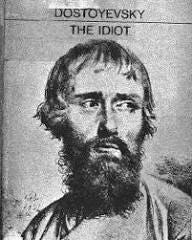
A pale young man in his mid-twenties arrives in Saint Petersburg. He wears foreign clothes unsuited to the Russian climate. He carries only a small bag, looks lost, and yet is in no hurry, as if he moves with the habitus of someone for whom, in the end, everything will work out. People become curious and begin to speak with him. He belongs to old privilege, to royalty, and yet he does not look important. A Swiss doctor had paid for his care and kept him alive abroad. He has no real ties, no practical experience. So the other passengers take him for something familiar: a pitiful, fragile remnant of aristocracy, one of those special sons of noble blood whose family has lost its fortune but not its name.
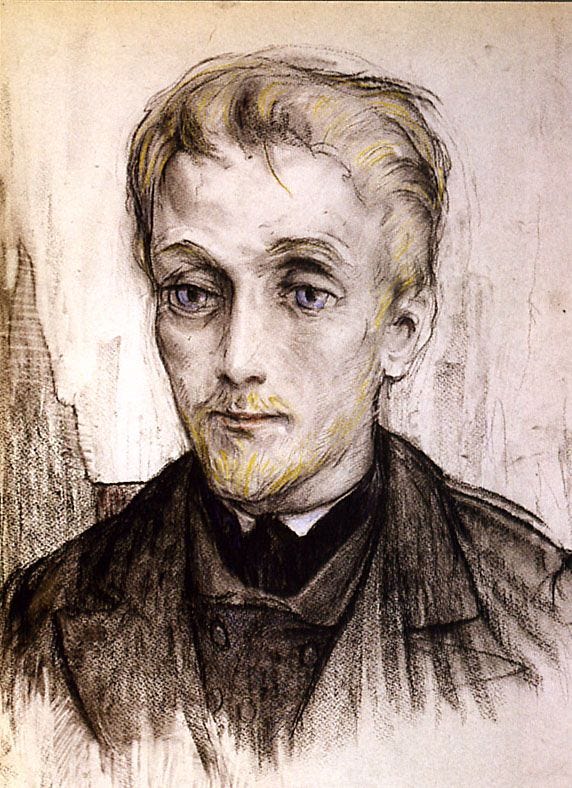
He manages to make important contacts with important people without seeming to try at all. On the train he wins the interest of Rogozhin, the son of a rich merchant, who promises him money and proper clothes. Soon after, he goes to visit the Yepanchins, distant relatives of his, though so distant that the connection feels almost absurd, more like a surviving thread of noble blood than a real family bond. The servants find him suspicious. He speaks to them almost as equals. He arrives without the signs that make a visit understandable: no clear business, no visible status performance, no practical explanation. He could be a beggar, a fraud, or perhaps what everyone fears most in such a setting: a genuine idiot.
They do not know how to place him. And because they cannot place him, the master of the house comes to see him personally and to test him. From the first impression it is clear that Myshkin has no stable position, nowhere obvious to stay, and little money. General Yepanchin makes it clear that he is not running a charity. Yet the prince answers in a strangely effective way. He says he is perfectly ready to leave at once, not to trouble anyone, that perhaps the whole visit was only a misunderstanding. He does not directly ask for help. He does not name his need. He does not describe his anxiety or defend his situation. That restraint gives him power. By refusing to articulate his lack, he places the burden of interpretation on everyone else.
General Yepanchin asks the prince whether he has any practical skills with which he might earn money. Myshkin explains that his illness prevented a normal education, that much of life passed him by while he was being treated. But as the conversation continues, it becomes clear that he is far from empty. He is highly literate, attentive, and unusually cultivated. Then he demonstrates his calligraphy, copying texts from different ages and countries with the care of an artist. What first appeared as useless refinement suddenly becomes economically and socially valuable.
As a result, he does not leave the house merely with pity. He leaves with support. The General gives him twenty-five rubles, a significant sum for an ordinary worker, offers him the possibility of bureaucratic employment with decent pay, and helps secure him a respectable place to stay through recommendation and guarantee. More than that, Myshkin is invited further into the family circle. They become interested in him, in his education, in his experience abroad, in the prestige of his name and lineage. In other words, his apparent weakness opens the door, but what enters through it is not pure helplessness. It is cultivated distinction.Myshkin’s power often works through understatement.
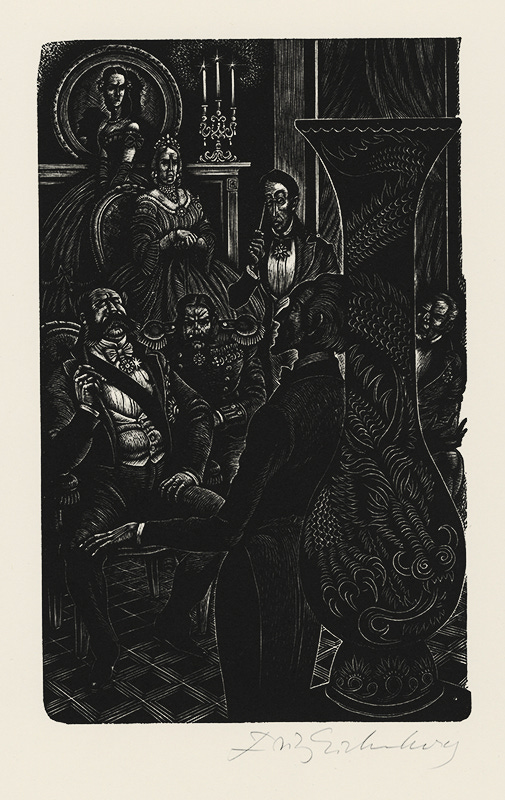
Through the network of relationships that quickly forms around him, the prince gains access to one of the most desired women in the elite circle of Saint Petersburg. Nastasya Filippovna is not simply beautiful. She is surrounded by male attention, pursued, desired, and feared. Myshkin enters this field from a strange angle. He does not present himself as a rival in the ordinary erotic game. At their first encounter, Nastasya mistakes him for a mere servant. He speaks of his illness as though it exempts him from ordinary desire. And yet this very exemption becomes his advantage. From the moment he hears of Nastasya, he becomes one of the decisive forces in her destiny.To be associated with a highly desired woman is one of the clearest status games among men. She becomes a public sign that one is capable, chosen, and positioned above rivals within the social world.

This is what makes his position so effective. He does not approach her as a lover in the usual sense, but as something morally higher: a friend, a rescuer, a man who claims to accept a woman together with all her sins, wounds, and humiliations. Other men do not fully take him seriously at first. But this too is part of the game. The man who does not appear to compete is often the one who enters most deeply.
At this point in the novel, the full truth about Myshkin’s financial situation has not yet been revealed. Later he will come into a large inheritance. In that sense, he was never simply a helpless dependent in need of rescue. The charity of the Swiss doctor, the assistance of the Yepanchins, the sympathy he receives from others, all of this helps him survive, but it also helps install him within higher society. And help has its own hidden psychology: the one who helps does not remain neutral. Once people invest in you, they begin to feel attached to you. They defend what they have supported. They grow curious about what they have sustained. To help someone is often the first step toward becoming bound to them.
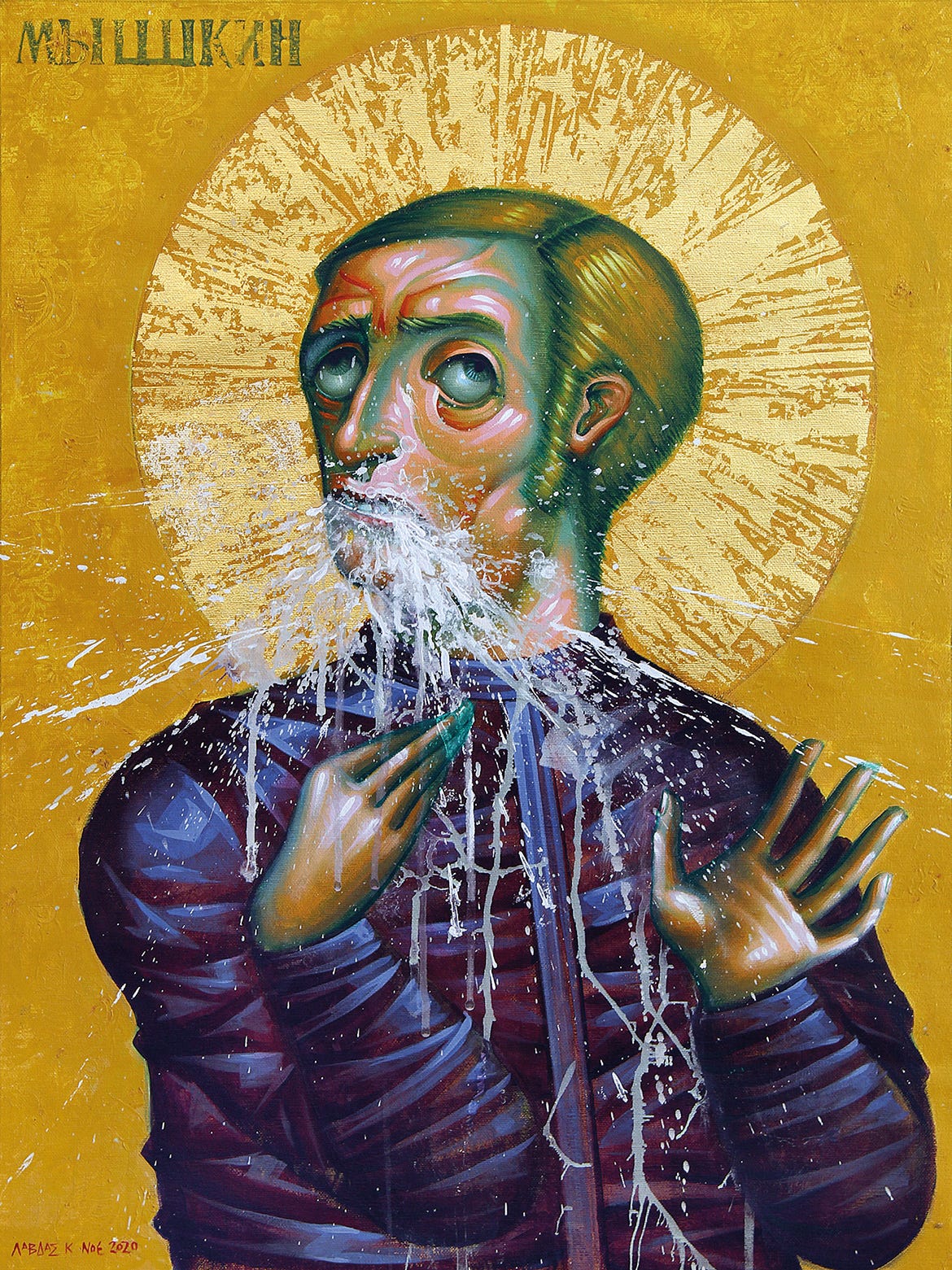
And this may be the most important part. Whenever reality begins to turn against him, whenever he says too much, crosses a boundary, becomes entangled where he should not, or is called out by others, Myshkin has one final refuge: he becomes the idiot again.
He is epileptic. He is fragile. He is overwhelmed. And this changes everything. What might otherwise appear as intrusion, irresponsibility, or even manipulation is suddenly softened by pity. His weakness becomes a kind of protection. He can step into the conflicts, desires, and interests of other people, and when tension rises, he appears again under the sign of incapacity. Who wants to be harsh with the sick man? Who wants to be the one punishing the idiot?
This is why Myshkin is so difficult to judge. His vulnerability is real, but it is also socially effective. It disarms others at exactly the moment they might hold him responsible. The label “idiot” humiliates him, but it also exempts him. It lowers the standard by which he is judged, even as it gives him unusual freedom to trespass into the emotional lives of others.
And perhaps this is where the reader becomes most vulnerable to him as well. We do not want to accuse the weak. We want to protect them, excuse them, care for them. We assume that visible suffering cancels the possibility of strategy. But what if that is precisely how the game works? What if the wound is not only a source of pain, but also a source of power? Then the question changes. The problem is no longer whether Myshkin is an idiot. The question is whether we are the idiots, because we still do not know how easily pity can be used to suspend judgment.
To play the script of Prince Myshkin is nothing unusual. We see it wherever suffering must first become legible before it is taken seriously. In elite institutions, those who already possess education, and access usually know best how to translate their difficulties into the language of diagnosis and disadvantage. Their pain enters the system in a recognizable form and is therefore more likely to be protected. Others may suffer no less, yet remain unseen because their struggle appears without the right vocabulary.
A rich kid with tennis lessons and piano classes may still feel like an underdog. He compares himself upward, not downward. Beside uncles buying villas abroad and family friends arriving by helicopter, his own life looks almost simple. Myshkin lives inside a similar psychological dissonance: he experiences himself as vulnerable and ordinary, while standing on protections he barely seems to notice.
Meanwhile others, often poorer, less articulate, suffer in ways no less real but far less legible. Their learning disabilities remain undiagnosed. Their exhaustion is called laziness. Their confusion is treated as low intelligence. Their pain appears without the correct vocabulary, and so it wins no protection. One person receives empathy because their weakness is visible and narratable. Another receives suspicion because their weakness arrives without polish.
This is why the problem is not weakness itself, but the social game around weakness. No one wants to identify with Goliath. The blessed, too, want to appear excluded, wounded, or misunderstood. Moral life today rewards the figure of the injured outsider more than the figure of the powerful insider. But empathy is not limitless. It gathers where suffering is most visible, most aesthetic, most institutionally legible. And so those who already possess advantages often become the most convincing performers of disadvantage, while those who are truly crushed by life remain unseen.
Hiii Edgar!
I found it so amazing, thanks for sharing it.
All the best.
Where and how do you find these stories? Amazing storytelling as usual Edgar!