
Closing Pandora’s Jar
On the Modern Fantasy of Sameness

Imagine a world inhabited only by men. No wives. No families. No one trying to impress anyone. Life is simple. Work enough to survive. Share a drink. Train. Build. Compete, but without existential stakes. Effort leads directly to reward.
In such a world, men are largely self-sufficient. Labor sustains life, and life does not demand much. Desire has not yet become restless.
Hesiod describes this as a golden age. The arrival of the feminine does not simply add another presence. It changes the logic of the world. Satisfaction is no longer contained within action and effort. It now depends on being seen and desired in return. The order shifts.
The myth describes a movement from sufficiency to incompleteness. Suffering begins when fulfillment depends on something that cannot be fully understood.

A very long time ago, when the world was young, only men lived on the earth. They did not have wives or families. They lived simply, and though life was not perfect, it was quiet and steady.
But high on Mount Olympus, Zeus was angry.
A clever Titan named Prometheus had stolen fire from the gods and given it to men. Fire helped them cook, build, and grow stronger. Zeus did not like being disobeyed.
So he decided to send a gift.
He asked Hephaistos, the god of the forge, to shape a woman from clay. She was beautiful and alive with charm. The other gods gave her gifts too — grace, curiosity, sweetness, and a restless mind.
Her name was Pandora, which means “all-gifted.”
Zeus also gave her a sealed jar and warned her never to open it.
Pandora went to live among men. At first, everything seemed peaceful. But she often looked at the jar and wondered what was inside.
One day, curiosity became too strong.
She lifted the lid.
Out flew sickness, sorrow, envy, and hardship. They spread quickly through the world. Frightened, Pandora closed the jar again.
Inside, one small thing remained.
Hope.
And from that day on, men had to work harder and face pain. But they were never without hope.
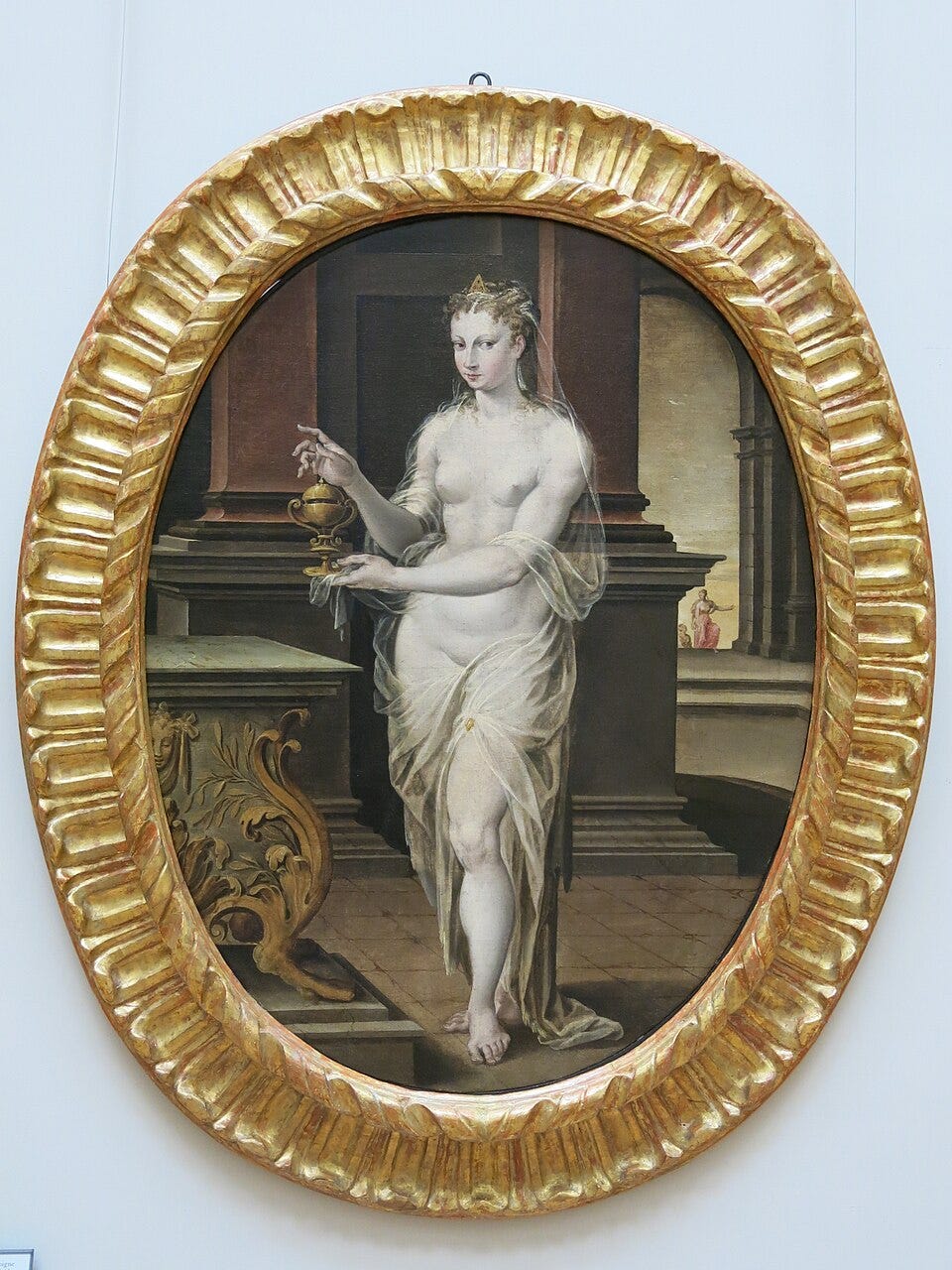
Why the jar, and why the prohibition against opening it? The motif echoes another foundational scene of interdiction, the story of Eve and the fruit. In both cases, catastrophe follows from the encounter with knowledge. In the Hebrew tradition, to “know” carries an intimate and erotic resonance. Knowledge is not abstract information but relational exposure.
The sealed jar therefore signifies more than concealed misfortune. It marks the threshold of desire itself. What is forbidden acquires magnetism. The act of opening is less an error than an initiation into mediation, into a world in which attraction binds the subject to consequence.
Sexual difference, in this light, is not introduced as punishment but as complication. To be drawn toward the other is to enter a field where satisfaction is no longer immediate or self-contained.
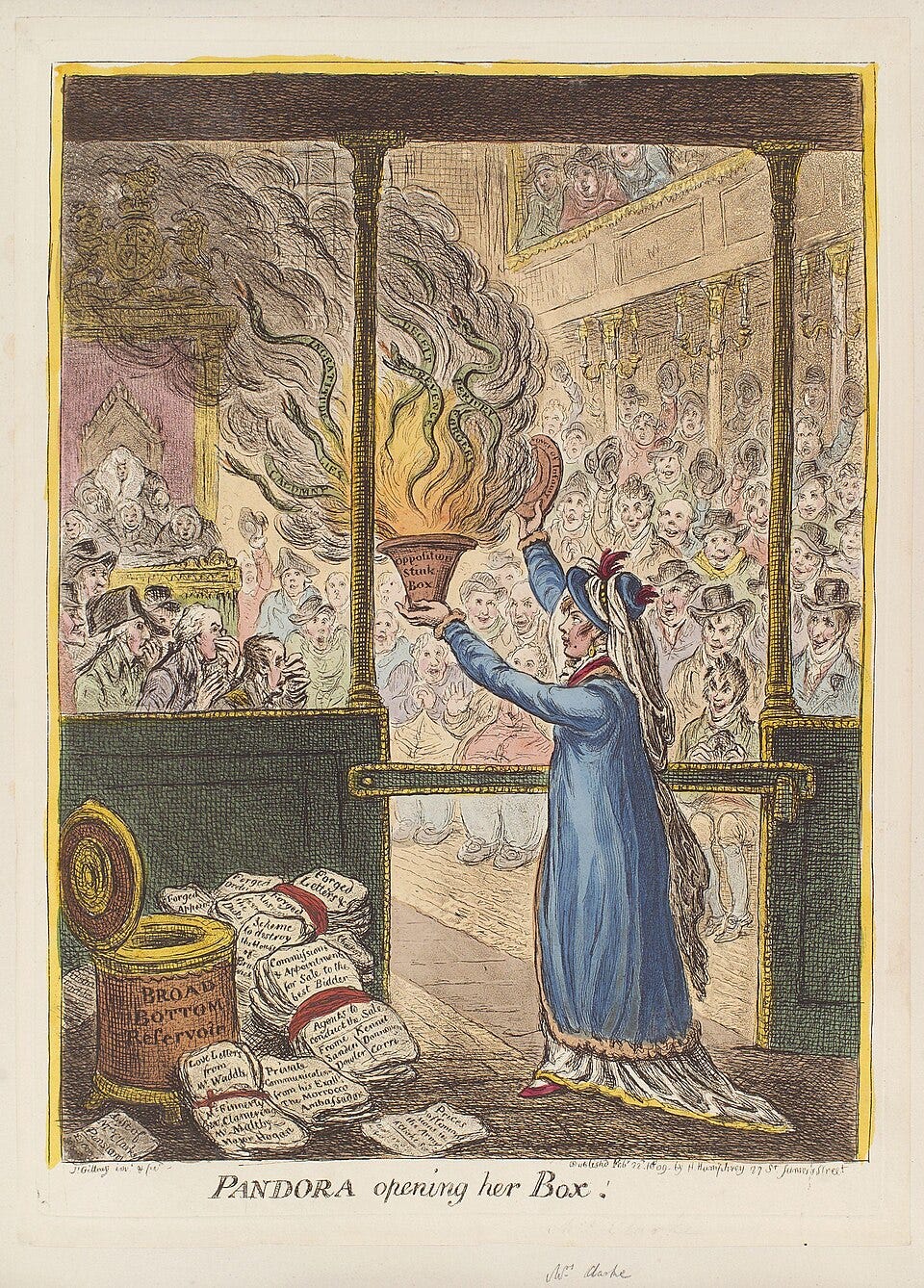
Instead of saying, “I suffer because I desire,” the myth says, “She brought suffering.” Vulnerability is displaced onto a figure. The pain is externalized.
What changes, however, is not morality but structure. Before sexual difference enters the scene, hierarchy circulates within a closed male field.
With the emergence of desire, recognition becomes unstable. It is no longer enough to be competent among peers. One must also become desirable before an external gaze. Competition intensifies. Effort expands. Life is reorganized around comparison.

Epimetheus sensed a change before he understood it. The ease he shared with his companion no longer moved in the same way.
When Pandora entered the room, the dynamic altered. Glances turned toward her. Words became measured. What had once passed directly between friends now moved through an awareness of her presence.
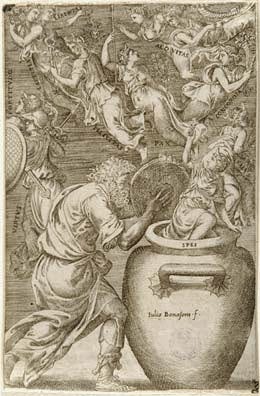
What Pandora wants ?
Epimetheus begins to ask what Pandora finds attractive and what he must become in order not to lose her. The question marks a shift. Recognition is no longer secured among peers.
The masculine and feminine gaze do not follow identical criteria. What elevates a man within a male hierarchy does not necessarily translate into desirability.
A powerful physique may function as status among men. It circulates within a closed field of recognition. Attraction follows another logic.
The discrepancy produces confusion. Men ask what women want, as though desire obeyed a formula. Some attempt to reshape themselves accordingly.
Desire resists instruction. When the self is reorganized around anticipated approval, attraction weakens.

You cannot earn love with more work.
A masculine illusion treats desire as both contract and account. Effort becomes deposit. Sacrifice turns into credit. Devotion is expected to secure return. Epimetheus begins to assume that loyalty should guarantee stability, that consistency should protect him from loss. But you cannot earn love with more work.
He keeps track without admitting that he does. The hours worked. The gifts chosen. The home cleaned. The compromises made. When warmth fades, he feels confusion before anger. He searches for imbalance, as though something has been miscalculated.
Desire is not a bank account. No contract guarantees it. What holds in the world of work and exchange loosens in the world of intimacy.
The jar opens again, this time as projection. It becomes an explanation for effort without reward, for hard work without recognition, for suffering that feels useless and unequal. What cannot be integrated is recast as evil.

The myth also contains a hidden solution in the form of a masculine fantasy: what if sexual difference could be neutralized? What if women followed the same symbolic logic as men, differing only in biology? The tension introduced by desire would disappear. Brotherhood would remain intact.
The desire to neutralize sexual difference found theological expression in certain strands of Gnostic Christianity, and it continues to echo in modern consciousness.
Saying 114 from the Gospel of Thomas:
“Simon Peter said to them, ‘Let Mary leave us, for women are not worthy of life.’ Jesus said, ‘I myself shall lead her in order to make her male, so that she too may become a living spirit resembling you males. For every woman who will make herself male will enter the kingdom of heaven.’”
Salvation is imagined as the transcendence of sexual polarity.
A similar impulse appears in Greek mythology. On the island of Lemnos, the women, after killing their husbands, attempt to live without men altogether. The polarity is removed, and with it the tension. The fantasy operates in reverse, but the structure is the same: peace through separation.

These movements do not vanish in modernity. They reappear in softer forms. The isolated individual imagines himself self-sufficient, an atomic unit no longer dependent on difference. Desire folds back into self-reference.
Men attempt to turn women into companions who follow the rules of male friendship, adding sexuality but removing unpredictability. Women, in their own way, may attempt to transform men into emotionally transparent girlfriends. Both gestures aim at reducing otherness. The friction of polarity is replaced with familiarity.
In this way, desire is not overcome but domesticated. The other is reshaped into a manageable version of the self. What is avoided is not conflict, but mystery.
We want reasons and measurable standards. We want attraction to follow clear rules. But desire is not transparent. It does not explain itself or reward effort in predictable ways. This uncertainty unsettles us. To desire is to depend, and dependence makes us vulnerable. Rather than risk rejection, we retreat into controlled forms of autonomy. We choose consumption over encounter, selecting what cannot refuse us instead of facing another will. In protecting ourselves from heartbreak, we also distance ourselves from the tension that makes desire real.
i told myself I dont have time to read such a long post and should sleep, but I was inmediately captivated since the start.
At times, language frames desire, gender difference, and intimacy in ways that reflect your bias, particularly of gender and roles. I really enjoyed it! The closing was fantastic!
Very interesting reading on desire and how mythology has tried to understand it!